Winter is coming? Summer forever? Something else entirely?

I've been thinking alot about our economic system lately. It's not working. It hasn't been working, as evidenced by how much homelessness and food insecurity there has been increasing for so long, a city center unused (San Fransisco), increasing suicide rates, and the self-medication of drug and alcohol abuse. Don't even get me started about hiring and how there's so much work to do, but somehow it can't be done because the money isn't there. We're urged, by threat of death by starvation and exposure, to hold out for wages and investment.
Our current economics is based on scarcity. The underlying problem it's geared towards solving is how do we survive the winter, how do we leave winter with enough seeds accumulated to start the spring and get to summer abundance, and implicitly asks who we have to sacrifice to make that work.
Abundance economics is late onto the scene – years instead of centuries in Western thinking (deeper – entire functioning economies! – if you look beyond Western civilization). What seems to be emerging as the core concept is that there's enough to share, we can step away from scarcity economics. A person who saw this draft immediately chimed in, "abundance with resource reduction! only use as much as you need!" While I can absolutely get behind having a floor and ceiling, it doesn't always stop there. I've seen the idea in abundance circles that there's so much plenty, so we should all be able to live like kings. Even as I dig into different viewpoints in a concept that is vying internally for what it really means, just the fact that it's landed on "abundance" as a label will predispose people towards thinking that budgeting is no longer a thing to worry about.
I have problems with both scarcity and the unmitigated abundance scenarios.
In scarcity economics, survival is the goal, so hardship is a given. We sacrifice, and demand sacrifice from others. Right now, we're not paying attention to the fact that all the accumulated seeds have become nonsensical playthings to the people who have them stuffed out of reach. They are so far removed from the hardship and sacrifice that, if the Epstein Class is the primary example, they think seeing and creating it is part of the perks. Useful, enjoyable, even risible for how stupid people are to be easily tricked and pressured into accepting predation.
In abundance economics, if we don't also include resource use reduction, we'll run into the same problem we have with water. We've literally skewed the earth on it's axis by displacing water. We turn on a faucet, see it run ad infinitum, and think nothing of the gallons we use. Engineers often design without water stewardship as a constraint. Data centers are our recent expressions, uncaring of what they are gulping in quantity nor externalizing in toxins. But even in terms of dishwashers, laundry, and shower heads it's taken a shift in expectations to work the engineering towards a minimized-quantity priority that still delivers on the aspects for why water was unconstrained.
I also think about how the idea of water abundance – that some farmers believe they can take what they need once the infrastructure is built, and how others have to take what they said they needed one year to ensure that it's available in subsequent years – that's significantly contributing to draining the Colorado River. It's also developers, creating ersatz oasis in deserts to make their developments feel more special. Those are just top of mind. This isn't caused by just one implementation, but a multitude that all, intrinsically, believe that the spigot that never runs out means the water could never dry up.
What happens if that sense of immutable eternal abundance shifts to everything?
Both ideas – scarcity and abundance – remind me of the transition to Stalinist USSR, where the non-farming communities believed in the magical abundance of food, and the farming communities starved to keep the food flowing. An easier entry into the history is Mr. Jones, a 2019 movie centered on the Welsh journalist who broke the story.
"Men thought they could replace the natural laws," was the summation of a woman in the crowd, who informed Mr. Jones that it was millions dead. He'd himself just left a village of children, one house of which offered to feed him since he, too, was half starving. The scene and how it rolls into the above line and through to his return to Moscow is, in my opinion, the lynchpin of the movie. It's what has haunted me for the years since I last saw it (I rewatched it to make sure it was the movie I thought it was, said what I thought it said).
To be clear, this is a problem with human behavior, and the willingness to ignore information and human suffering to prove an ideology. We are doing it to ourselves now, so the economic model – capitalism or communism – isn't the indicator.
Neither the scarcity nor abundance scenario really folds in the social ills deeply associated with how we're used to approaching trade. Here I'm deeply inspired by Riane Eisler, who amongst many other ideas points out that the things "everyone" wants is pressured to become cheaper, so that those who are trying to accumulate wealth all have access to it. She specifically cites prostitution, but I also think the same model ("we (the wealth accumulators) want it, so fucking give it over") is associated with food. Not only because of Stalin's crimes against humanity in the Ukraine, but because of how our economic systems keep tilting towards slavery: in Roman times, in the US as our predecessors shifted from indentured servants to slavery, on cacao farms today.
The sentiment, "we want it, so just fucking give it over already" is also the foundation of what's happening with data scraping, surveillance, and copyright infringement for AI.
It's so close to rape-and-pillage in the "logic" (I want it, give it to me) that we should seriously think about our current trade system as having a foundation in appeasing bullies and abusers.
It is not the only economic model humanity has ever devised. We are not constrained to this interpretation.
Approaching system
My mind keeps circling around a handful of concepts, numbered so I can expand in the appendix:
- that those of us who enjoy community, and haven't been too deeply traumatized by what's been taken away from us, love to share as long as it's truly sharing;
- that the sharers are those most likely to build, create, and grow;
- that those who want to bully and traumatize will find a way to take and accumulate, and dress it up to be more acceptable;
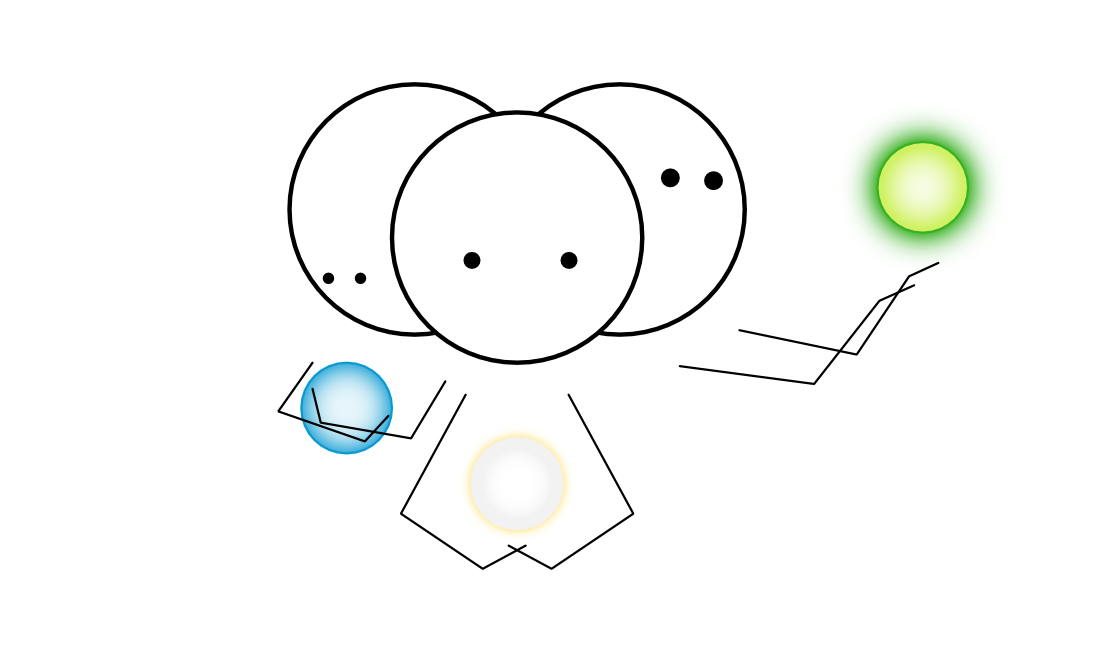
- that there are people who are 'exchange bridges', talking with both the sharing/growth community and the taking/accumulating tricksters and trying to balance the whole;
- that the tricksters love to control or pretend to be the 'exchange bridge';
- that there are people who are 'glue',trying to keep the sharing community functioning when it comes under stress;
- that even as embodied people, it's subtly tracing a system;
- that if we focus on the sharers, they tend to extend their care to the environment and sustainability;
- that some (most? all?) people tend towards an expression, but could shift based on context.
And in the end, our economic model has focused on the third bullet: how to accumulate. Again, dressed up with all kinds of logic and keywords that imply overall access, but the main goal seems to be focused on finding a way to accumulate. Preferably for control, because somehow in the act of accumulating they've evinced some kind of better-than. What that better-than is changes based on audience, and will reach for ever more convoluted logics and, eventually, aggression.
Maybe, maybe, it's deeply embedded in our psyche that these hoarders ensure that when spring comes, there will be enough left to plant and have an abundant summer. It vaguely assumes we can wrestle their wealth back to the community. I just can't reconcile this idea with how the business/billionaire class can't fold environmentalism into their stakeholder expectations, how we're exceeding our planetary boundaries, and the Epstein Class heavily influencing the disinformation around climate change.
But abundance itself, without understanding the behaviors that are deeply embedded in humanity – good and bad, those that help us in short and long cycles, those that leave more people thriving, and those that leave more people traumatized – isn't a whole concept. If abundance is our next experiment, without expressly approaching and framing all the things various threads within it says will "work itself out", it will fail. It might fail so hard that it might convince survivors that scarcity economics is the only way economics can successfully function.
Without society being specifically incentivized, without integrity and honesty being specifically lauded in the bridges and glue, I think our economics will continue tilting towards corruption, usury, slavery (or near), and lies. It will continue to tilt towards predation.
I don't care, really, how we formalize sharing – which is what economics really is. It's putting a number on the things we would trade, and adding/subtracting the numbers so we can decide how badly we want something within the totality of our landscape.
Support and protect the people who enjoy sharing. Keep the people who want to take and accumulate in check. Make it so survival isn't part of the everyday pressure that can be applied by those who want to take and accumulate. Get that much started, and I'll support the model.
Honestly, taxation to have a wealth cap and providing for baseline survival isn't a bad start.
appendix: expanding on the bullets
- Open source software is the number one, pervasive, and very recent example. Any artist or writer that doesn't keep their work in the attic/basement is sharing; the exchange sometimes folded in is to try to keep shelter, food, and utilities so they can keep creating.
- As long as we separate the concept of 'building' away from 'accumulating' and 'creating' away from 'wealth'. I'm more convinced every day that this is a framing to try to dress up their accumulation as something less hoard-y than it is.
- No notes, this is my reduced understanding. ;)
- No notes, nascent understanding.
- See every dark triad behavior.
- We've been talking about glue my entire professional life. It's always been dismissed, or framed as extra work above and beyond the quantified-with-artifacts expectation of our job descriptions. The more I read about the Epstein Class, the more I think it's because they didn't want other, not-controlled-by-them networks forming, and didn't want the tracing and silo-hopping implicit in being the glue. Heffernan's take is about the clearest I've read so far, specifically around the connector role he built for himself.
- Systems thinking, with focuses on lenses, nodes, connectome, and strata. I have much of my thinking around this published on www.smudgingthebinary.com/systems, and re-editing scads of pages before republishing.
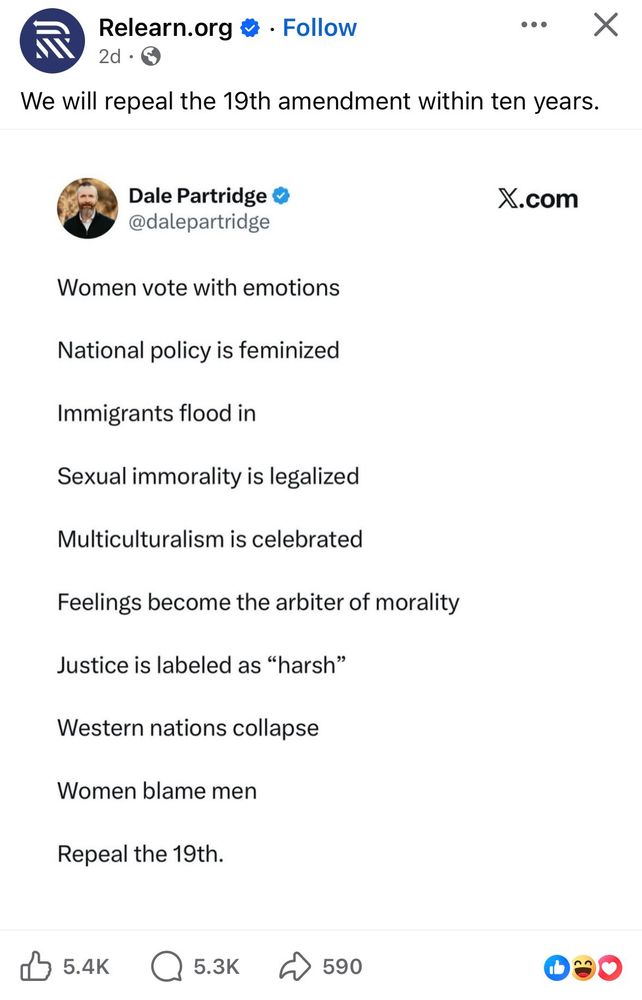
- I seriously can't stop thinking about the whole, "repeal the 19th amendment" diatribe ultimately coming back to "we can't care. Caring is bad. Caring needs to be eradicated."
- I'm absolutely a sharer – there isn't a day where I'm not creating or building something, somewhere, somehow. But I've learned how to negotiate for a higher salary. Evidence of switching?