Economic floors and ceilings

We need to have both if we intend to have a democracy.
Think about the economy like water: it flows and spreads to fill the nooks.
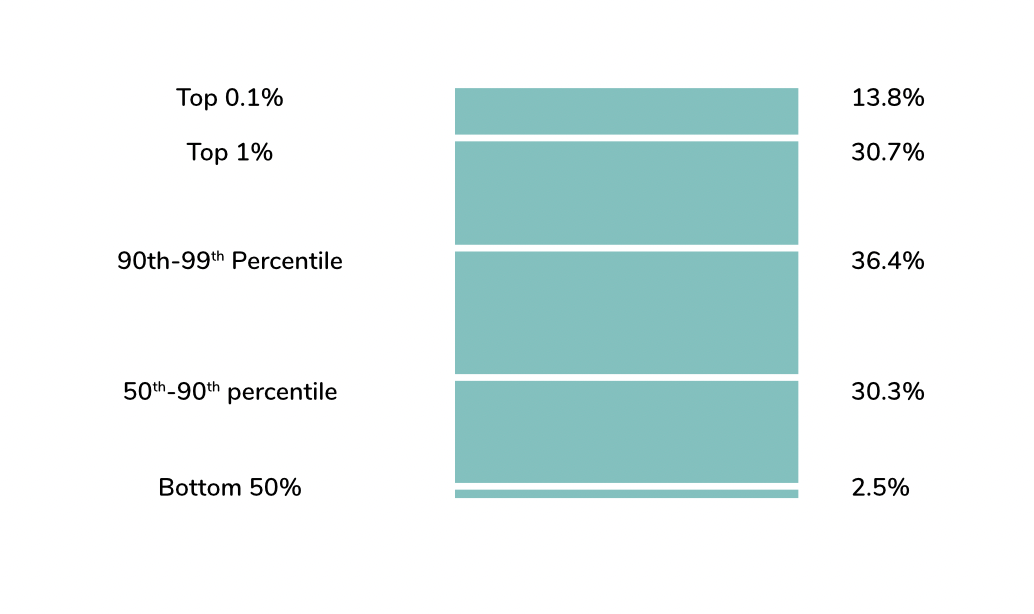
The below breaks, percents, and distribution is per the 1Q 2025 FRED.
The households number isn't provided in the FRED blog piece, but they are on IBIS, with the most current being 2024, calculated at 132.2m. Worldometer estimates US population at ~348m, so each household is ~2.6 people. Remember: babies need to survive.
We don't know the composition dynamics, but those non-earners – and our future – are somewhere. As are our elderly, our unhealthy and disabled, our stay-at-home parents, our students, and unemployed. Just because we aren't on someone's payroll doesn't mean we stop existing. So the total population affected by the percentiles distribution is what we need to wrap our heads around.
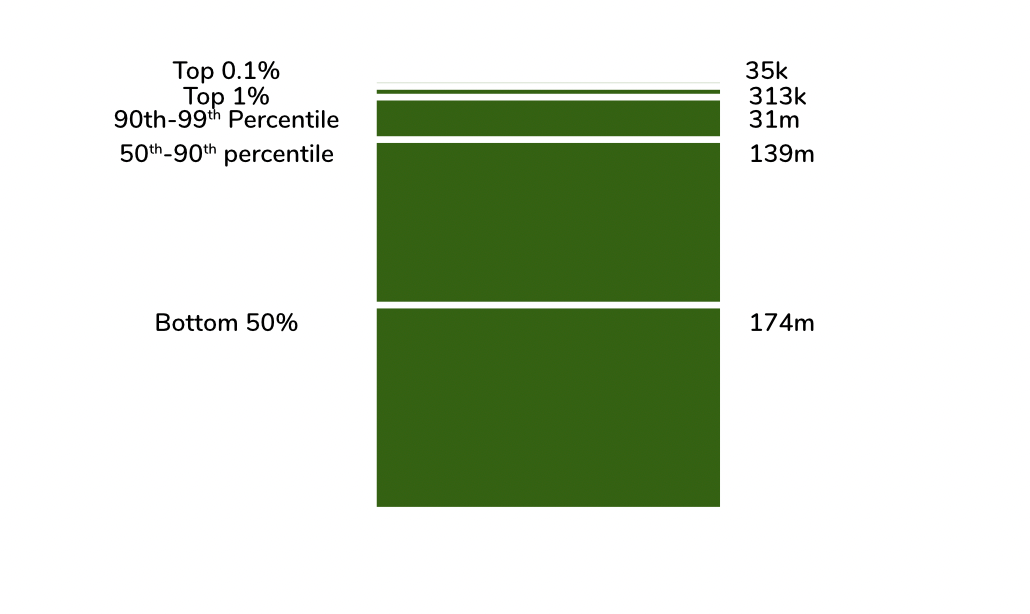
The thing about wealth accumulation is that it's not really about creature comforts. It is to a degree – that's why we get people miffed when their bias sees someone being too comfortable. But the wealthy don't feel wealthy except by comparison. To start getting an idea of the total freaking wonkiness, let's put them side by side.
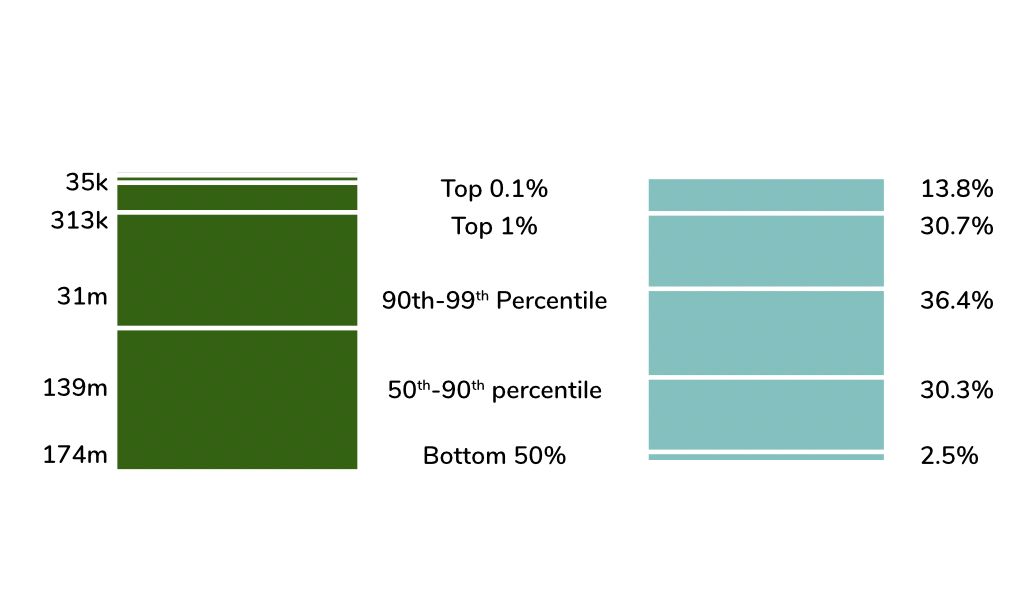
These numbers are out there, and have been tracked for decades. None of this is new, yet we're still having discussions about how everyone needs their shot at being wealthy, with a narrative that it's predicated on hard work and smarts – street or otherwise. I repeat: wealth is a comparison measure. Take someone from a couple centuries ago, and our poorest are wealthy by comparison. Our poor are still stressed and anxious and constantly worried.
To really see what's going on, think about the population and money like volume. The population distribution is a container, the money a fluid that spreads – like water.
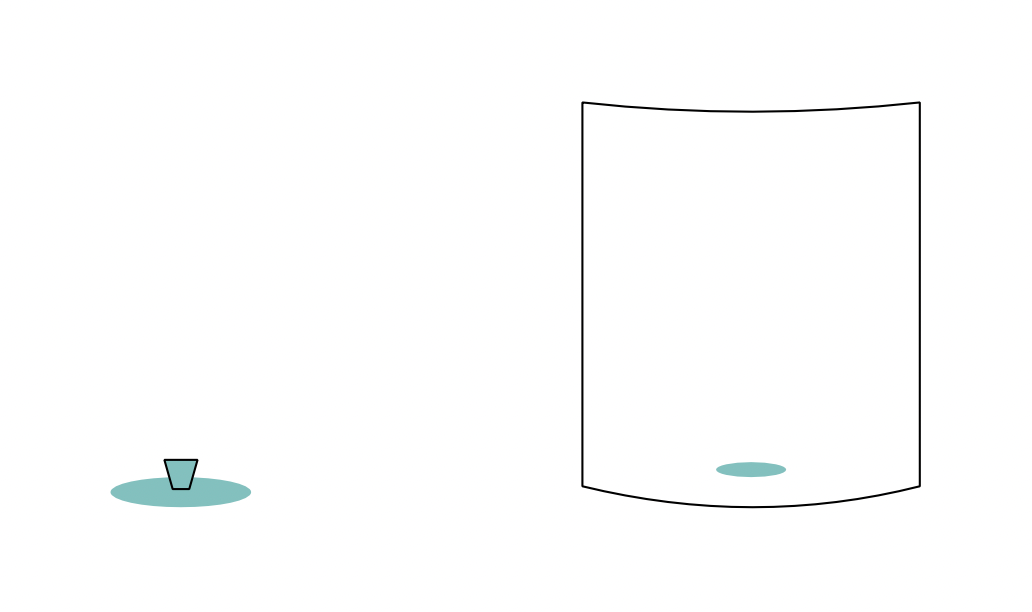
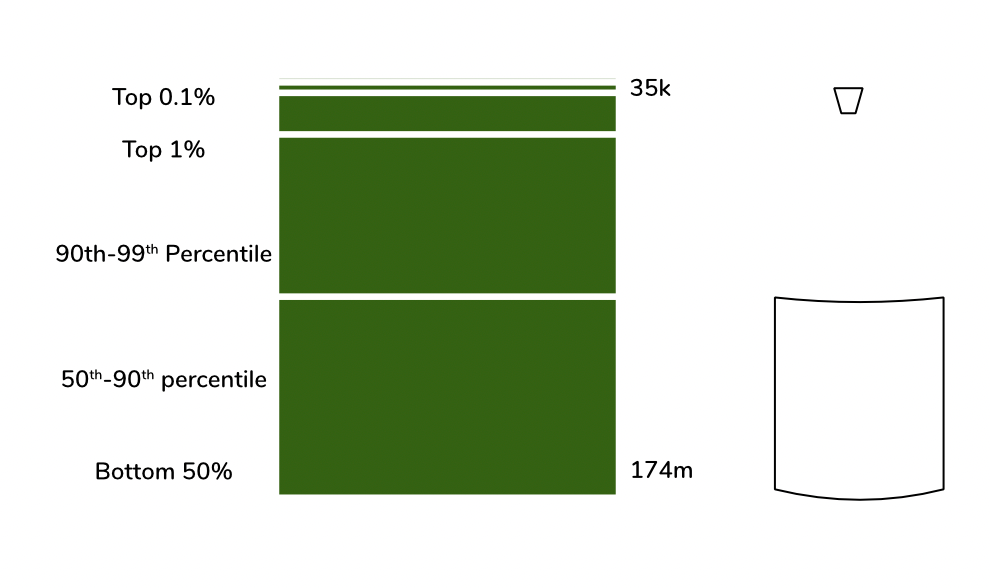
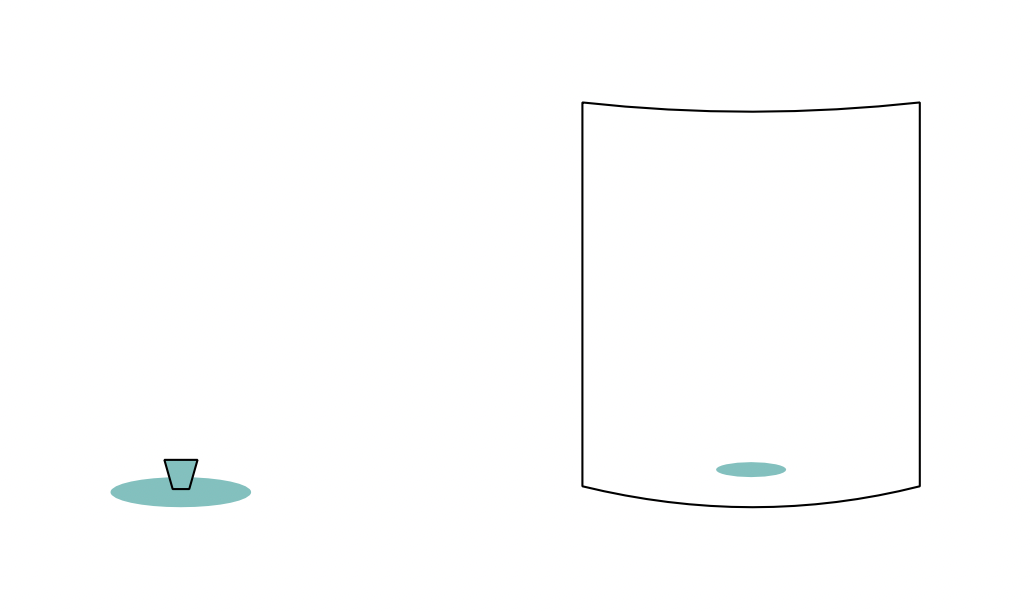
We'll consider the people in that 0.1% percentile to be like a thimble. Thimbles come in different sizes and are generally around 5-10mL of volume. We have a population of 348m, with 0.1% with enough wealth accumulation to be distinctly comparable to the rest of the population. That works out to about 35k. The bottom 50% of our population is 174m. Translate that mL to US standard volume, and that 174m works out to about a 10gal bucket. The volume comparisons are rough, but something that's really easy to go out and get a physical sense of the difference we're talking about. Putting a 2-d graphic together at scale, the thimble is barely seen.
The volumes are still roughly in line, so if you experiment physically they'll be close enough to see the problem: a thimble, and a 10-gallon bucket.
The amount of wealth we have when we think of it in terms of percentiles doesn't change – it's always 100%. What does change is the distribution, and the volume of where it's put: the % wealth and population. So again, we can reach for volumes that make sense to us. Most of us have a set of measures for cups and teaspoons/tablespoons in the kitchen, or know someone who does. So, think about our total economy as being a cup of water, 13.8% of it distributed to the top 0.1%, 2.5% of it to the bottom 50%.
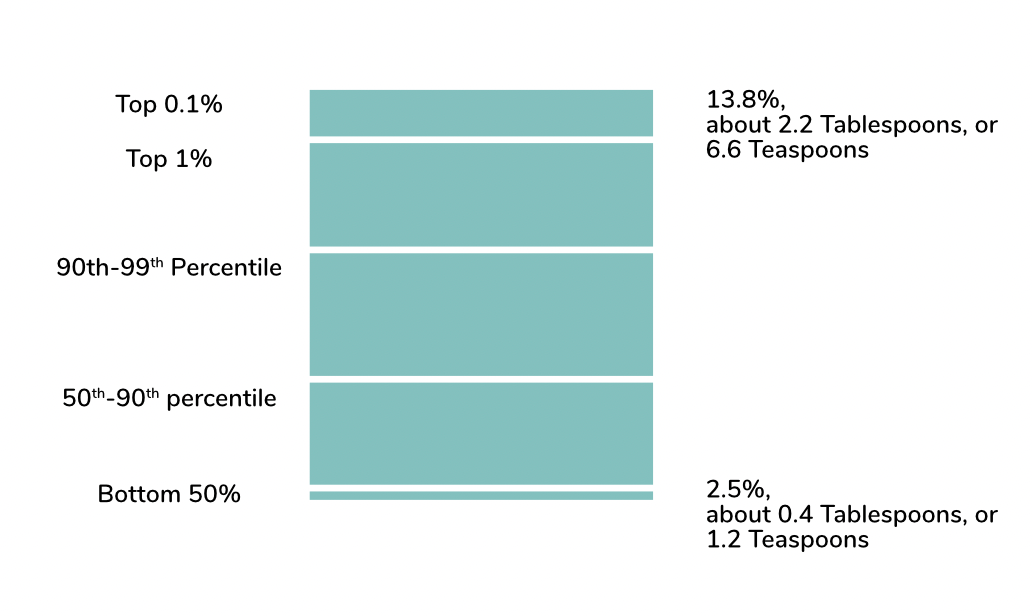
A bit more than 2 T of that water goes to the thimble, which is around 13k households/35k people. It overflows.
A bit more than a teaspoon is put in the bucket, which is around 66m households/174m people. Do the math, assume a thimble that contains 10mL, and the overflow of wealth from the thimble is twice the size of the total volume of wealth put in the 10 gal bucket for the bottom 50%.
What the economy does is support survival. We're in a capitalist society. Everything we need to live is tied to money. Capitalism worries most about the distribution of scarce resources; what scarce and wanted is expensive and draws people to work it, what's available and uninteresting is cheap, and labor is paid in kind.
BUT we've also put the want/interest metric on what we need to survive: food, shelter, electricity, communications, etc. This is Friedman's free market economy. Make those things scarce, and they'll get super expensive, like what's happening with our housing right now. Make them everyday, and the prices may not support production/supply chain cost for what the society needs in terms of cyclical materials, like food. Talk to farmers, and you know money isn't spreading to what we need to support to continue broadly surviving: food production on healthy land in a healthy environment.
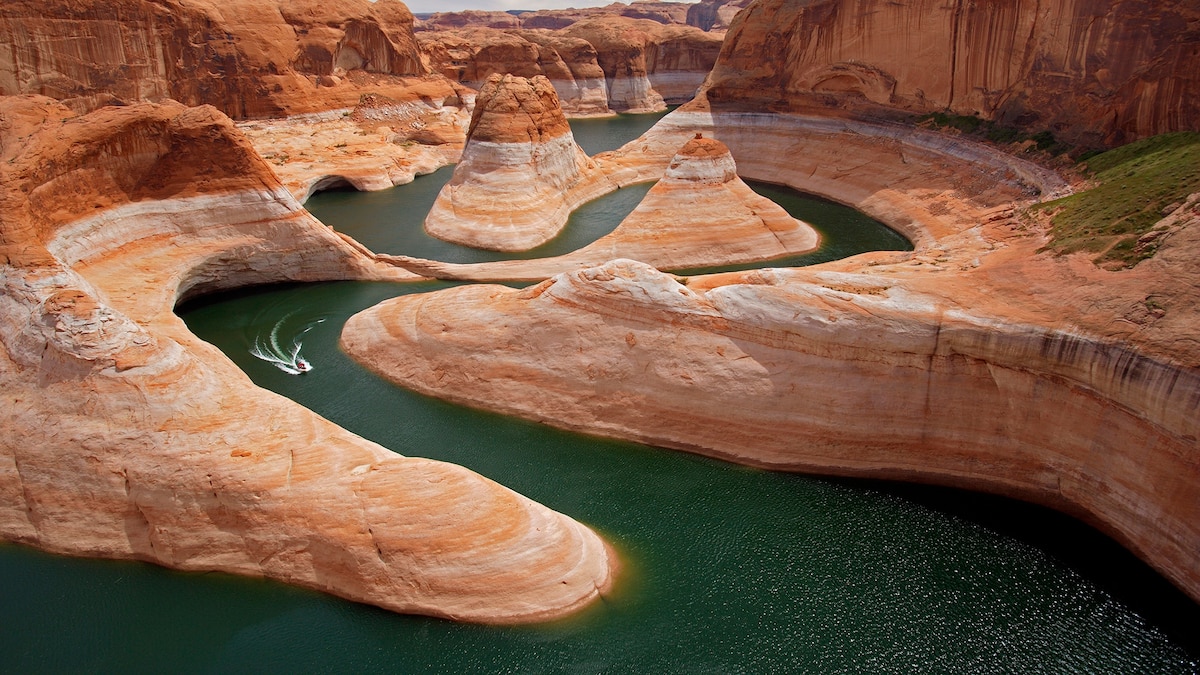
We can see, with our own eyes, what happens when water is blocked/taken at the source and can't feed downstream. It changes the environment. It's what's happening with the Colorado River right now. Those pictures are gut wrenching once they're understood. Very similar system mechanics are affecting our economy.

We know that desperate people do desperate things. They are easy to sway, easy to anger, and easy to convince to do harm to others in order to increase their survival potential. Desperate people will do shitty things at the behest of anyone with money to spend.
There's no longer an expectation for our wealthy to do good works with their overflow – they won't somehow transfer that into the bucket willingly. In fact, all signs are that they are actively seeking to increase their wealth in comparison with an increasingly tight population of other wealthy people so that they somehow "win". There is zero indication that they care about broader humanity, and so many signals that they've dehumanized vast swaths of humanity – think about certain comments about "NPC" populations.
If we do not have a wealth ceiling, the water in the bucket will continue to have less volume as the wealth increases in the top percentiles. The total wealth percents are always going to be 100% for the total; if that distribution percent changes, it changes the volume of water in the container. That 1.2 teaspoon to share amongst 174m people/66m households will get smaller.
We need ceilings.